

Party wall rules catch out a lot of homeowners, usually because nobody mentions them until the builder is ready to start. The good news is that the process is set out clearly in the Party Wall etc. Act 1996 and the government's explanatory booklet, and most notices end with a neighbour simply agreeing in writing. This guide explains when the Act applies to an extension or loft conversion, how much notice you need to give, and what happens if your neighbour does not agree.
What the Party Wall Act covers
The Act applies anywhere in England and Wales. According to the government guidance, it covers three kinds of work:
- Work to an existing party wall or party structure, such as a shared wall between two semi-detached or terraced houses.
- New building on or at the boundary between two properties, including a new wall built astride the boundary line.
- Excavation near a neighbouring building, within 3 or 6 metres depending on how deep the new foundations go.
The Act is separate from planning permission and building regulations approval. A project can be permitted development, have full building regulations approval, and still need party wall notices.
Common examples on extensions and loft conversions
The explanatory booklet lists the work owners most often carry out under the Act. On a typical extension or loft conversion that includes:
- cutting into a party wall to take the bearing of a beam, which the booklet gives as an example for a loft conversion
- raising the height of a party wall, for example when adding another storey
- inserting a damp proof course or underpinning the whole thickness of a party wall
- cutting off projections from a party wall, such as removing a chimney breast
- digging foundations within 3 metres of a neighbour's building where your foundations will go deeper than theirs
- digging foundations within 6 metres of a neighbour's building where the work would cut a line drawn down at 45 degrees from the bottom of their foundations
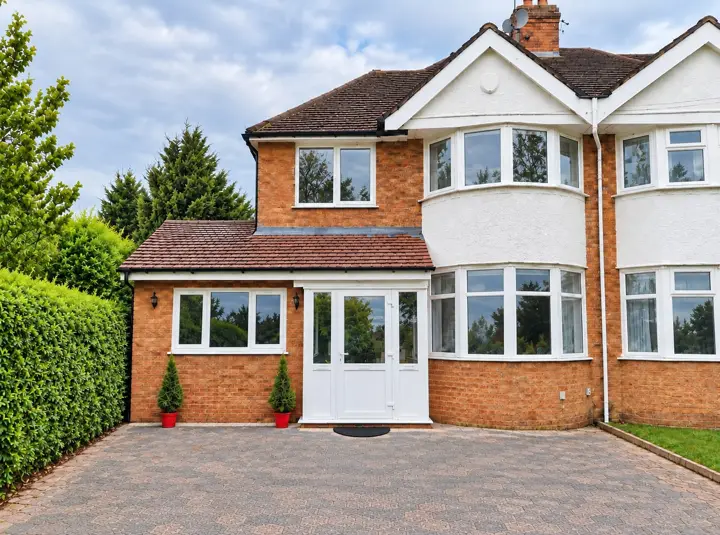
That is why side return extensions, rear extensions close to a boundary and most loft conversions on semi-detached and terraced houses usually involve at least one notice. The booklet is clear that you must not even cut into your own side of a party wall without telling the adjoining owners first.
How much notice you need to give
| Type of work | Minimum notice |
|---|---|
| Work to an existing party wall or party structure | At least two months before work starts |
| Building a new wall on or astride the boundary line | At least one month before work starts |
| Excavating within 3 or 6 metres of a neighbouring building | At least one month before work starts |
Notices are only valid for a year, so do not serve them too far ahead. They should be in writing, dated, and say clearly that they are given under the Act. A neighbour can agree to work starting earlier, but they do not have to.
What happens after you serve notice
Your neighbour can consent in writing, refuse, or do nothing. If they have not replied within 14 days of a notice about work to a party wall or an excavation, the Act treats it as a dispute. A dispute does not stop the project. It simply moves it into the surveyor process.
The booklet's advice is to talk your plans through with your neighbours before any notice arrives. A notice that does not come as a surprise is far more likely to get a quick written consent.
Party wall surveyors and the award
If there is a dispute, the owners either agree on one surveyor, called an agreed surveyor, or each appoints their own. Two appointed surveyors select a third surveyor, who is only called in if they cannot agree. Whoever is appointed must act impartially and resolve the dispute fairly, whichever owner appointed them.
The surveyor or surveyors then make a party wall award. This sets out the work to be done, when and how it will be carried out, any extra work needed to protect the neighbour's property, and usually a record of the condition of the neighbouring property before work begins, so any damage can be properly identified and put right. Keep a copy of the award with your property deeds.
Where the work is only for your benefit, you will usually pay all the costs of drawing up the award, including your neighbour's surveyor's fees. Either owner can appeal an award to the county court within 14 days of it being served.
What if you start without serving notice?
The Act has no enforcement procedure of its own, but the booklet warns that a neighbour can seek a court injunction to stop the work, or take other legal action. On an extension or loft conversion, that could mean the site stops halfway through, which is far more disruptive than waiting out the notice period at the start.
Planning your timeline around party wall notices
Because work to a party wall needs at least two months' notice, it makes sense to serve notices as soon as the design is settled, while planning permission or building regulations approval is being dealt with. That way the notice period runs alongside the other approvals instead of delaying the start date.
If you are planning an extension or loft conversion in Solihull, Birmingham, Sutton Coldfield or Warwickshire, we can talk you through whether your plans are likely to come under the Act as part of a free, no obligation quote, so you can serve notices in good time.
About HK Builders
HK Builders Ltd is a building company based in Shirley, Solihull, and a member of the Federation of Master Builders with over 20 years' experience. We build extensions, loft and garage conversions, renovations and new homes across Solihull, Birmingham and the West Midlands. Get in touch for a free, no obligation quote.
Call 07393 194 336Get a free quote